


How to Build a Culture of Innovation Within Your Organization
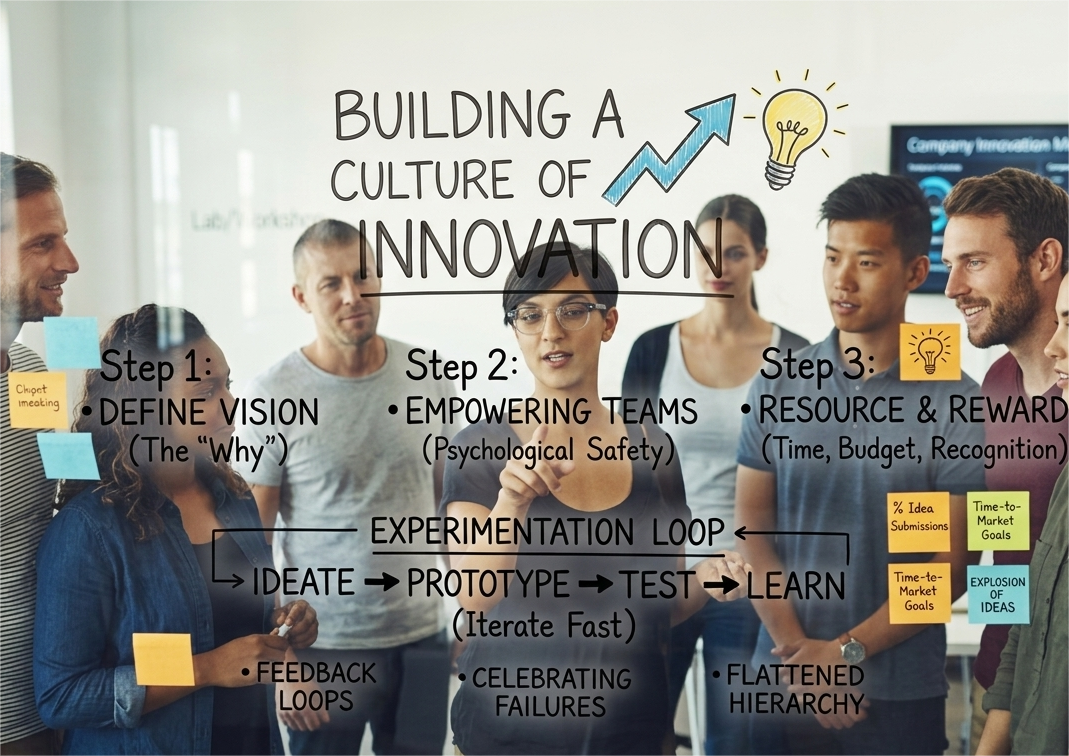
What is a Culture of Innovation?
A culture of innovation is an environment where creativity, experimentation, and continuous improvement are encouraged and embedded into everyday work. In these organizations, employees feel safe to share ideas, challenge norms, and explore new approaches without fear of failure.
Companies like Google LLC and Netflix, Inc. are widely recognized for cultivating innovation-driven cultures that consistently produce groundbreaking ideas and services.
Why Innovation Culture Matters
A strong innovation culture delivers tangible business benefits:
-
Increased Agility: Teams respond faster to market changes and disruptions.
-
Higher Employee Engagement: People feel valued and motivated to contribute ideas.
-
Continuous Improvement: Processes and products evolve consistently.
-
Sustainable Growth: Innovation drives long-term success and competitiveness.
Key Elements of an Innovation-Driven Culture
1. Leadership Commitment
Innovation starts at the top. Leaders must actively champion innovation, set a clear vision, and allocate resources to support creative initiatives.
When leadership prioritizes innovation, it signals to employees that new ideas are valued and encouraged.
2. Psychological Safety
Employees must feel safe to share ideas, take risks, and even fail without fear of criticism or punishment. Psychological safety fosters open communication and creative thinking, which are essential for innovation.
3. Collaboration and Diversity
Innovation thrives when diverse perspectives come together. Encouraging cross-functional collaboration helps generate richer ideas and more effective solutions.
Organizations that break down silos and promote teamwork often see higher levels of creativity and innovation output.
4. Structured Innovation Processes
Creativity alone is not enough—innovation requires structure. Implementing frameworks such as design thinking, agile methodologies, or innovation management systems ensures that ideas are captured, evaluated, and executed effectively.
5. Continuous Learning and Development
Organizations that invest in learning empower employees to develop new skills, stay updated on trends, and apply innovative approaches in their roles.
Practical Steps to Build a Culture of Innovation
1. Encourage Idea Generation
Create platforms such as innovation labs, suggestion systems, or regular brainstorming sessions where employees can share and develop ideas.
2. Reward Innovation
Recognize and reward employees who contribute innovative ideas or lead successful initiatives. This reinforces positive behaviors and motivates others.
3. Embrace Experimentation
Allow teams to test ideas through pilot projects and prototypes. Accept that not all initiatives will succeed, and treat failures as learning opportunities.
4. Leverage Technology
Use tools for collaboration, data analysis, and project management to support innovation efforts and improve efficiency.
5. Align Innovation with Business Goals
Ensure that innovation initiatives are strategically aligned with organizational objectives, maximizing impact and ROI.
Real-World Example
Organizations like 3M Company have long embraced a culture of innovation by allowing employees dedicated time to explore new ideas, resulting in breakthrough products and sustained success.
Common Challenges and How to Overcome Them
-
Resistance to Change: Address through clear communication and leadership support.
-
Lack of Resources: Allocate dedicated budgets and time for innovation initiatives.
-
Fear of Failure: Build a culture that views failure as a learning opportunity.
-
Siloed Teams: Promote cross-functional collaboration and shared goals.
Conclusion
Building a culture of innovation is a strategic journey, not a one-time initiative. It requires leadership commitment, employee empowerment, and structured processes that support creativity and execution.
Organizations that successfully foster innovation cultures are better positioned to adapt, grow, and lead in an increasingly competitive and dynamic business landscape.


GInI is the world’s leading professional certification, business accreditation, and membership association in the field of innovation.
Get the latest resources, news and more.
Professional Certifications
CInP® - Certified Innovation Professional
CDTP® - Certified Design Thinking Professional
CInS® - Certified Innovation Strategist
CCInO® - Certified Chief Innovation Officer
AInA® - Authorized Innovation Assessor
CInA® - Certified Innovation Associate
AGVA® - Authorized Growth Venture Assessor
CFSP® - Certified Future Shaping Professional
Business Accreditations
CInOrg® - Certified Innovative Organization
CGInO® - Certified Government Innovative Organization
CInU® - Certified Innovative University
CInGV® - Certified Innovative Growth Venture
AInL® - Accredited Innovation Lab
ABI® - Accredited Business Incubator
AAP® - Accredited Accelerator Program
AInTP® - Accredited Innovation Training Program
AInEP® - Accredited Innovation Education Program
InE® - Innovation Endorsement
CFSOrg® - Certified Future Shaping Organization